HOME SCIENCE ✦ BIOLOGY ✦ COOKING & NUTRITION ✦ NETBALL ✦ UNIVERSITY OF ELDORET ✦ LIFELONG LEARNING ✦ CBE EDUCATION ✦ STEM PATHWAY ✦ KENYAN EDUCATION ✦ EVERYDAY CURIOSITY ✦ HOME SCIENCE ✦ BIOLOGY ✦ COOKING & NUTRITION ✦ NETBALL ✦ UNIVERSITY OF ELDORET ✦ LIFELONG LEARNING ✦ CBE EDUCATION ✦ STEM PATHWAY ✦ KENYAN EDUCATION ✦ EVERYDAY CURIOSITY ✦
Who She Is
About Shantel
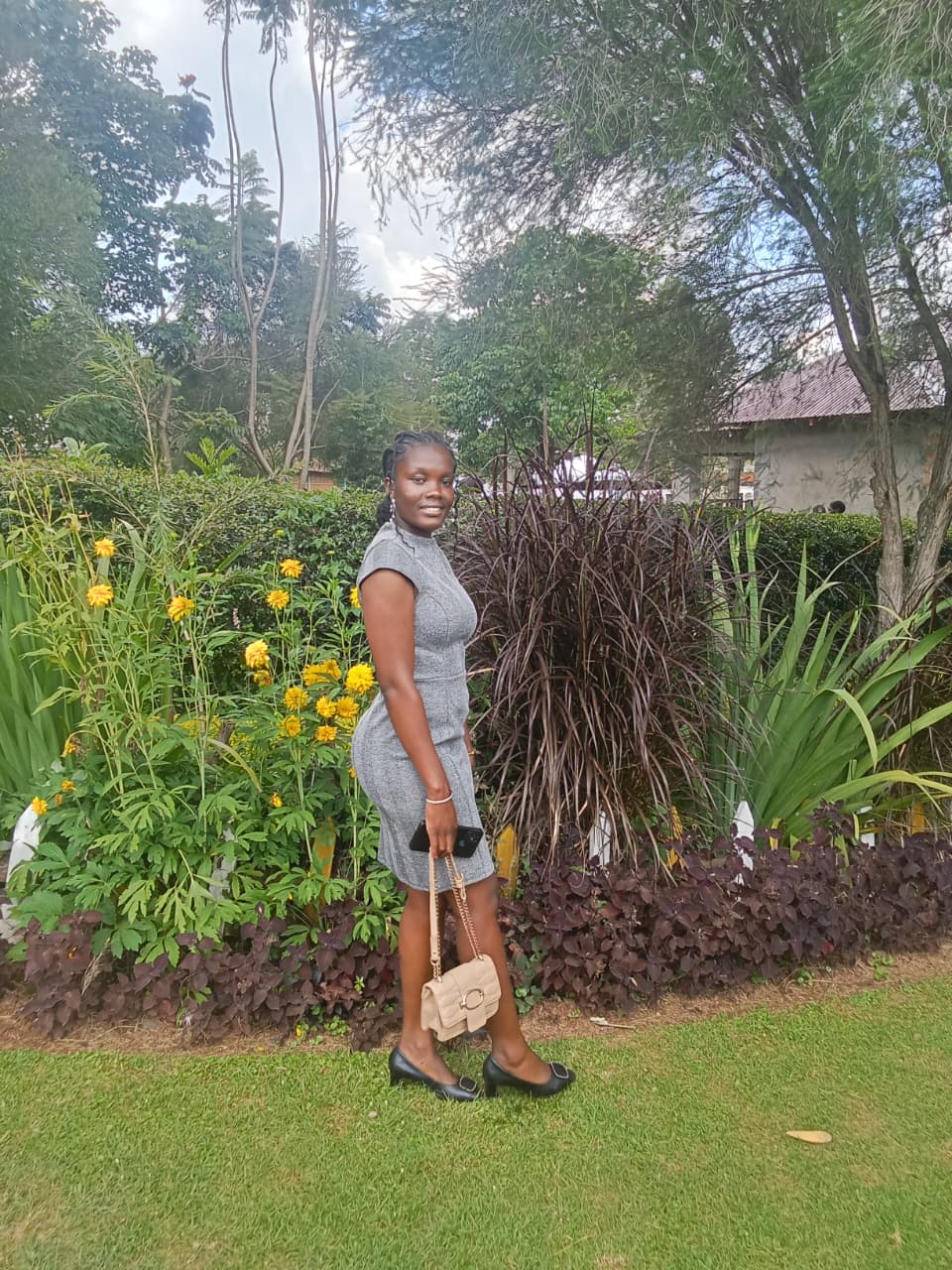
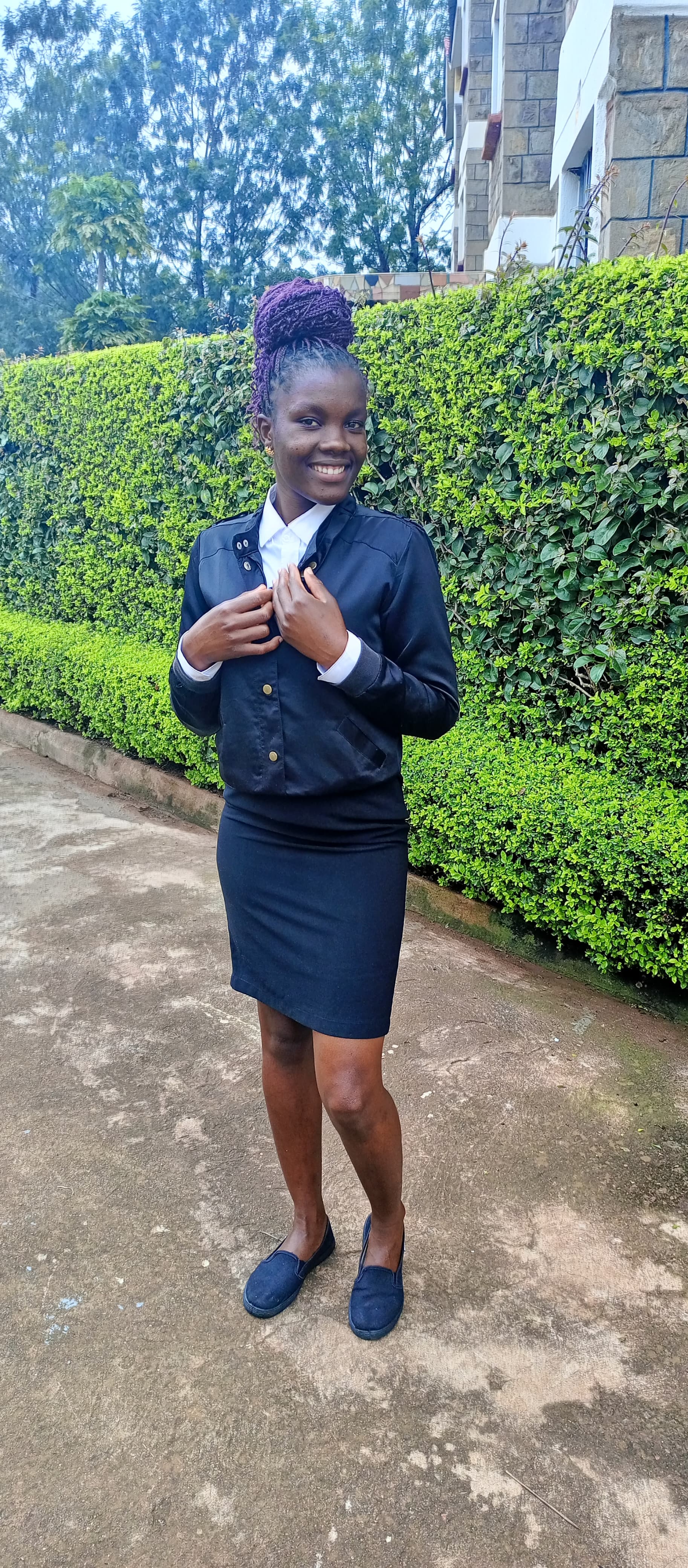
Shantel is a dedicated educator who brings Home Science and Biology to life with warmth, depth, and an infectious love for learning. A graduate of the University of Eldoret with a BSc in Home Science, she understands that knowledge is most powerful when it connects directly to how we live — what we eat, how we care for ourselves and our families, and how our bodies work.
Beyond the classroom, Shantel is a curious soul on a constant journey of growth. Whether she's mastering a new recipe, perfecting her netball game, or diving into a subject she hasn't taught before, her belief is simple: a teacher who never stops learning is a teacher who never stops inspiring.
Home ScienceBiologyNutrition & FoodStudent-Centred TeachingLifelong LearningNetballC.B.E Facilitator
Home Science — Her Heart Subject
Home Science is more than a subject to Shantel — it's a philosophy of living well. From nutrition and textiles to family resource management and child development, she teaches her students that the science of everyday life is just as rigorous and rewarding as any laboratory discipline.
Her lessons are grounded in practical application: cooking demonstrations, nutritional analysis, environmental health, and consumer science all feature prominently. She believes when students see how a subject touches their daily lives, learning becomes genuinely exciting.
Biology — Decoding Living Systems
Teaching Biology allows Shantel to explore one of her deepest curiosities: how living things work. From cell biology to ecology, genetics to human physiology, she brings the complexity of life into sharp, accessible focus for her students.
She is committed to expanding her Biology knowledge every day — reading current research, following scientific developments, and translating new discoveries into classroom-ready content that sparks genuine wonder in her learners.
Cooking — Where Passion Meets Purpose
Shantel loves cooking — not just as a hobby, but as a daily practice of creativity, nourishment, and discovery. Inspired deeply by her Home Science background, she approaches the kitchen the way she approaches teaching: with curiosity, care, and a readiness to try something new.
Every new recipe is a new skill. Every technique mastered is another chapter in a lifelong education that no classroom can fully contain. Food, to Shantel, is connection — to culture, to family, and to the science of how our bodies are nourished.
What She Teaches
Her Classroom
Every lesson is an opportunity. Every student, a story worth investing in.
Food & Nutrition
Exploring the science of what we eat — from macronutrients to meal planning, food safety, and the cultural richness of Kenyan cuisine. Practical, hands-on, and deeply relevant.
Home Science Core
Textiles & Clothing
From fibre types to garment construction — teaching students about fabric, fashion, and the economics of sustainable clothing choices. Creativity meets applied science.
Home Science
Home Management
Family resource management, environmental health, and housing — equipping students with knowledge to build healthy, efficient, and dignified homes.
Home Science
Cell Biology
The building blocks of all life — from organelles to cellular processes, metabolism, and mitosis. Making the microscopic world feel as vivid as the world outside the window.
Biology
Genetics & Heredity
Decoding the language of DNA, inheritance patterns, and genetic diversity. Connecting Mendel's peas to real questions about identity, health, and human variation.
Biology
Ecology & Environment
Understanding ecosystems, biodiversity, and our role within the natural world — relevant to every student growing up in Kenya's rich and varied landscapes.
Biology
What She Brings
Skills & Strengths
92%
Home Science Teaching
Passionate, practical, and purpose-driven delivery of Home Science curriculum.
80%
Biology Instruction
Expanding daily through research, curiosity, and a commitment to her learners.
95%
Culinary Arts
A genuine love for cooking that grows with each new recipe attempted and mastered.
87%
Student Engagement
Creating warm, inclusive classrooms where every student feels seen and motivated.
Her Journey
Academic Background
University
BSc Home Science
University of Eldoret, Kenya
Majored in Home Science with coursework spanning food and nutrition, textile science, family resource management, environmental health, and consumer science. Graduated with a strong foundation for classroom delivery and ongoing professional development.
Teaching
Home Science & Biology Teacher
Kenya — Active
Currently serving as an educator teaching both Home Science and Biology within Kenya's CBC framework. Committed to providing students with knowledge that goes beyond the syllabus — equipping them for life, health, and informed decision-making. Constantly expanding her Biology expertise to serve her learners better.
Always
Lifelong Learner
Every day, everywhere
Shantel believes that a teacher's education never ends. She actively seeks new knowledge — in cooking, in biology, in teaching methodology, and in anything that makes her a richer, more well-rounded educator. One new skill every single day.
Shantel's Teaching Philosophy
A comprehensive presentation summarising Shantel's approach to education — her values, methods, CBC alignment, and commitment to every student she teaches. Available as a downloadable PDF.
Applied Sciences — Food, Textile & Family Resource Management
Biology Branch
Life Sciences — Cell Biology, Genetics, Ecology & Physiology
59%
of 2025 KJSEA candidates showed STEM potential (incl. Home Science & Biology)
1.1M+
learners sat Kenya's first Junior School Education Assessment in 2025
2017
Year CBC was introduced in Kenya, replacing the 8-4-4 system
Trend 01
Competency-Based Learning Over Content Delivery
CBC shifts the focus from what students know to what they can do. For Home Science, this means assessing practical skills — cooking labs, textile projects, nutrition analysis — alongside theory. For Biology, scientific inquiry, fieldwork, and lab investigations are now core assessment components rather than optional extras.
Home Science · Biology
Trend 02
Continuous Assessment Replaces High-Stakes Exams
Classroom-Based Assessment for Learning Activities (CALA) replaces end-of-year examinations with ongoing portfolio-based assessment. Home Science teachers document practical projects and cooking demonstrations; Biology teachers record lab reports, field studies, and scientific investigations throughout the year.
Assessment Reform
Trend 03
Learner-Centred Pedagogy as the New Standard
Teachers are now facilitators of discovery rather than lecturers of content. Students learn through project-based activities, peer collaboration, and real-world problem-solving. Home Science students plan and execute meals and household budgets; Biology students design experiments and analyse ecosystems in their local environments.
Pedagogy
Trend 04
Digital Literacy Integration Across All Subjects
CBC mandates ICT integration across all subjects. Home Science teachers are expected to use nutrition databases, recipe planning applications, and textile design software. Biology teachers leverage digital microscopes, virtual laboratory platforms, and online scientific databases to enrich practical learning experiences.
Digital Education
Trend 05
Life Skills and Holistic Education at the Core
CBC explicitly links academic content to real-life application. Home Science is recognised as a life skills subject — directly addressing nutrition, health, and family management in ways that are immediately applicable. Biology connects to health education, environmental conservation, and career pathways in medicine, agriculture, and environmental science.
Life Skills · Holistic
Trend 06
Environmental Sustainability in Science Teaching
CBC places strong emphasis on environmental stewardship and sustainability. Biology teachers are expected to incorporate ecology, conservation, and climate change into their lessons, connecting Kenya's rich biodiversity to global environmental challenges. Home Science teachers address sustainable food systems, waste management, and eco-friendly household practices aligned with Kenya's Vision 2030 green economy goals.
Sustainability · Biology
Professional Development
Career Growth Opportunities
Pathways, resources, and strategies for Shantel to grow as an educator, expand her expertise, and make a broader impact in Kenyan education.
🎓
Postgraduate Studies
Pursuing a Master's degree in Education, Home Science, or Biological Sciences would deepen subject expertise, open doors to university lecturing, and qualify Shantel for curriculum development roles with KICD or the Ministry of Education.
Higher Education
📋
TSC Professional Development
The Teachers Service Commission (TSC) offers structured professional development programmes, including CBC retooling workshops, subject mastery courses, and leadership training for aspiring heads of department and deputy principals.
TSC · Leadership
🌐
Online Certifications
Platforms such as Coursera, edX, and FutureLearn offer internationally recognised certifications in nutrition science, biology, educational technology, and curriculum design — all of which strengthen Shantel's professional profile and CBC delivery capacity.
Online Learning
✍️
Educational Content Creation
Developing CBC-aligned teaching resources, lesson plans, and assessment tools for platforms like Elimu Bora or self-publishing creates additional income streams while establishing Shantel as a thought leader in Home Science and Biology education in Kenya.
Content · EdTech
🤝
Professional Networks & Associations
Joining the Kenya Science Teachers Association (KESTA), Kenya Home Economics Teachers Association, or international bodies such as the International Federation for Home Economics (IFHE) connects Shantel with peers, research, and collaborative opportunities across Africa and beyond.
Networking
🔬
Research & Curriculum Development
Contributing to educational research on CBC implementation, Home Science pedagogy, or Biology teaching in Kenyan contexts positions Shantel as an expert voice. Published research opens doors to consultancy roles, conference speaking, and collaboration with KICD on curriculum design.
Research · KICD
Shantel's Recommended Career Growth Pathway
A practical, step-by-step roadmap for professional advancement within Kenya's education system — from classroom excellence to educational leadership.
01
Master CBC Delivery
Complete TSC CBC retooling, earn CALA certification, and build a portfolio of competency-based lesson plans.
02
Pursue Postgraduate Study
Enrol in a Master's programme in Education or Applied Sciences to deepen expertise and open senior roles.
03
Build a Professional Brand
Create CBC teaching resources, publish educational content, and join professional associations to grow visibility.
04
Move into Leadership
Progress to Head of Department, Deputy Principal, or curriculum development roles with TSC, KICD, or universities.
Beyond the Classroom
Her Life
🍳
The Cook
For Shantel, the kitchen is a classroom without walls. Inspired by a career spent teaching nutrition and food science, she brings the same curiosity to cooking that she brings to her lessons. New dish, new technique, new flavour profile — she's always ready. Her philosophy? If you can understand how food works, you can make anything taste extraordinary.
The Athlete
Netball is where Shantel finds her rhythm — the quick passes, the teamwork, the strategy, the joy of a body in motion. On the court she is competitive, collaborative, and fully alive. It's not just exercise; it's community. There's a special kind of energy that comes from moving alongside others toward a shared goal — in netball as in teaching
Moments & Inspirations
"Every book is a lesson I haven't taught yet."
"Science explains the world. My job is to make that explanation irresistible."
"A perfectly balanced meal is a Home Science lesson made edible."
Fun Fact
"The human body contains approximately 37 trillion cells — and every single one of them is a potential lesson."
— Biology Classroom Wisdom
"On the netball court, I remember what it feels like to be a student again."
"Growth happens quietly, then all at once. I'm in the quiet phase — always."
"University gave me the foundation. Teaching gives me the reason to keep building."
Educational Quote
"Tell me and I forget. Teach me and I remember. Involve me and I learn."
— Benjamin Franklin
"Every recipe is a chemistry experiment waiting to happen."
"Teaching in Kenya means teaching for the future of an entire nation."
"A great lesson plan is an act of love for your students and colleagues."
Home Science Fact
"Home Science is one of the few subjects that directly addresses Kenya's nutritional health challenges — malnutrition, food insecurity, and dietary disease — in every single lesson."
— KICD Curriculum Framework, 2017
Cooking as Home Science in Action
"Cooking is Home Science in its most delicious form. I never stop experimenting."
Every dish Shantel prepares is an application of the principles she teaches — understanding how heat transforms proteins, how emulsification creates sauces, how fermentation preserves food. Her kitchen is a living laboratory where food science becomes flavour.
Did you know? Kenya's traditional cuisine is one of the most nutritionally diverse in East Africa, incorporating leafy greens, legumes, and fermented foods that align perfectly with modern nutritional science.
"The more Biology I learn, the more I want to share. My students deserve a teacher who's still curious."
From the double helix to the food chain, Biology connects everything. Shantel reads current research, follows scientific developments, and translates new discoveries into classroom-ready content. Her goal: to make the invisible world of cells and genes feel as real as the world outside the window.
Fascinating fact: Kenya is home to over 35,000 species of plants and animals — making it one of the world's most biodiverse nations and a living classroom for ecology and conservation.
"Netball taught me that a good team makes everyone look like a star."
On the court, Shantel practices the same values she brings to her classroom — communication, strategy, trust, and the belief that every team member has a role that matters. Netball keeps her physically active, mentally sharp, and connected to the joy of collaborative achievement.
Sport science connection: Regular physical activity has been shown to improve cognitive function, memory consolidation, and academic performance — making Shantel's netball habit a professional asset as much as a personal one.
"I read, I experiment, I reflect. That's the lesson plan I follow for my own life."
Shantel's commitment to lifelong learning is not a slogan — it's a daily practice. She reads widely across education, science, nutrition, and culture. She reflects on her teaching, adjusts her methods, and approaches her own growth with the same curiosity she asks of her students.
Research insight: Teachers who engage in regular professional reading and reflective practice demonstrate measurably higher student outcomes and greater career longevity, according to the East African Journal of Education Studies.
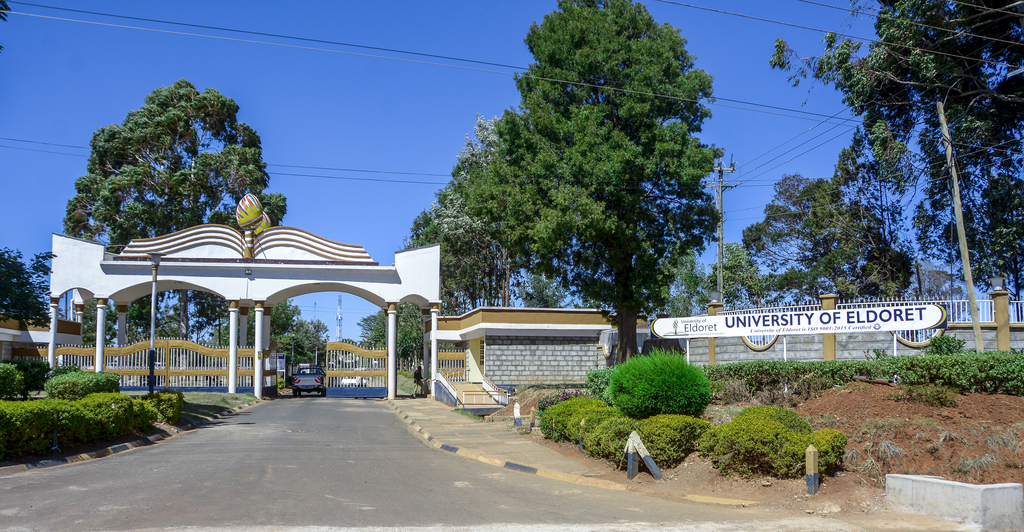
The University of Eldoret, located in Eldoret, Uasin Gishu County, Kenya, is one of the country's leading public universities. Established in 1994, it is renowned for its programmes in science, technology, education, and agriculture. The School of Education at UoE has produced thousands of dedicated teachers who serve across Kenya's education system.
Shantel's BSc in Home Science from UoE gave her the scientific rigour, practical skills, and educational foundation that defines her teaching today. The university's emphasis on applied knowledge and community service aligns perfectly with the values she brings to every classroom.
Shantel bridges theory and practice effortlessly. Her lessons are grounded in real life — from the kitchen to the classroom, knowledge must be useful.
Always Growing
She sets herself one new thing to learn every day. Whether it's a recipe, a concept, or a technique — stagnation is simply not in her vocabulary.
Student-Centred
Her students aren't just learners — they're her reason. She tailors every lesson to meet them where they are and take them somewhere further.
Warm & Driven
Teaching with warmth doesn't mean being soft. Shantel holds high expectations wrapped in care — producing learners who are both capable and confident.
Let's Connect
Get in Touch
✉️
Whether it's educational collaboration, a shared love of good food, netball tips, or simply a conversation about what it means to never stop learning — the door is open.